
Our recommendation For mice & rats
Information on rat control
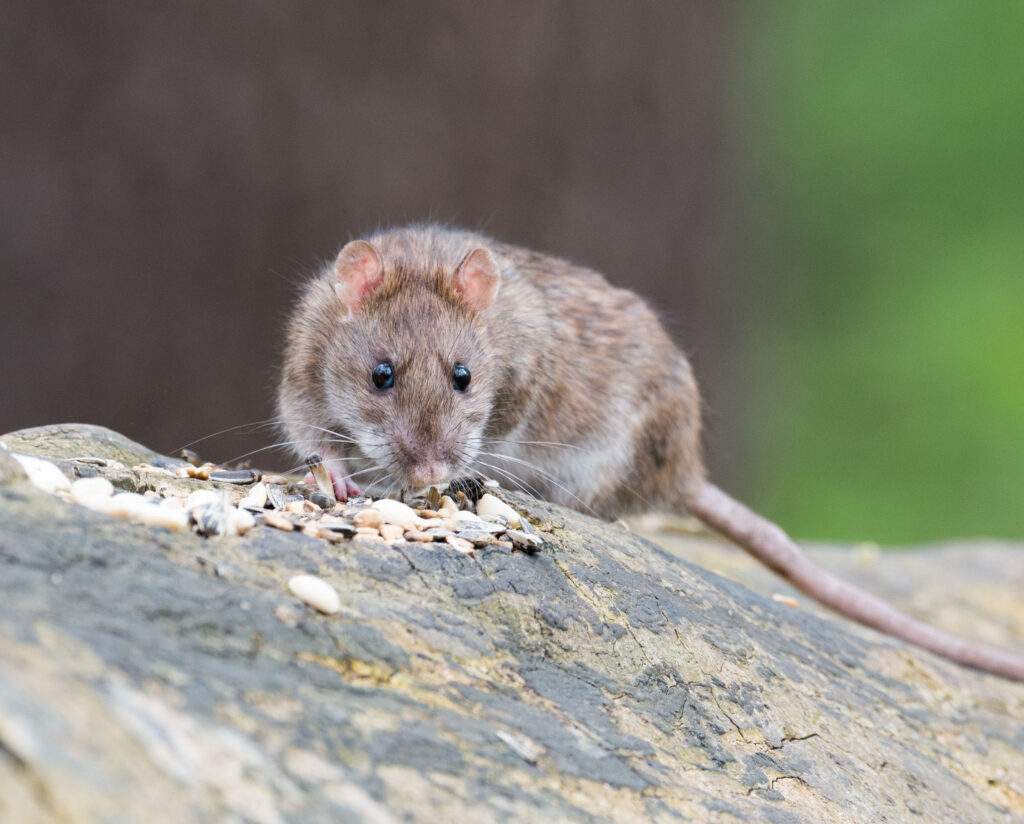
Rattus norvegicus
The Norway rat reaches a body length of 25 cm, its tail is 18-21 cm long,
it weighs between 200 and 400 g
Norway rats are large, powerfully built rats with an angular skull, blunt snout and thick tail
-
Occurrence:
They are often found in cellars, storerooms, cattle sheds and barns, on garbage dumps, near ponds, ditches, rivers and streams. -
Biology/development:
Norway rats live in a hierarchically organized pack of up to 100 individuals. They use their sense of smell for orientation and the members of a clan recognize each other by smell. They are territorial and are ready to fight to defend their territory from other packs. They are nocturnal and crepuscular animals and are extremely intelligent and adaptive, which is why fighting them can sometimes prove very difficult. The females have 3-7 litters a year, each with 4-8 young. Norway rats are omnivores.
-
Damage patterns:
Rats are carriers of diseases such as viral diseases: Foot and mouth disease, swine fever, rabies and hantavirus infections, diseases caused by bacteria: Leptospirosis, tuberculosis, salmonellosis, rat bite fever, Lyme borelliosis and spotted fever, they are also carriers of worm diseases and fleas. They spoil food9 and feed by eating and contaminating it, as well as transmitting fungi and mites.
-
Control:
Today, control is usually carried out with active substances that inhibit blood clotting. Use of feeding baits in pourable form at bait stations. Gel baits are ideal for locations where water is scarce, such as grain stores, as rats drink regularly. The quantity of a bait station for rats should be at least 150-200 g and should be checked regularly once a week.